
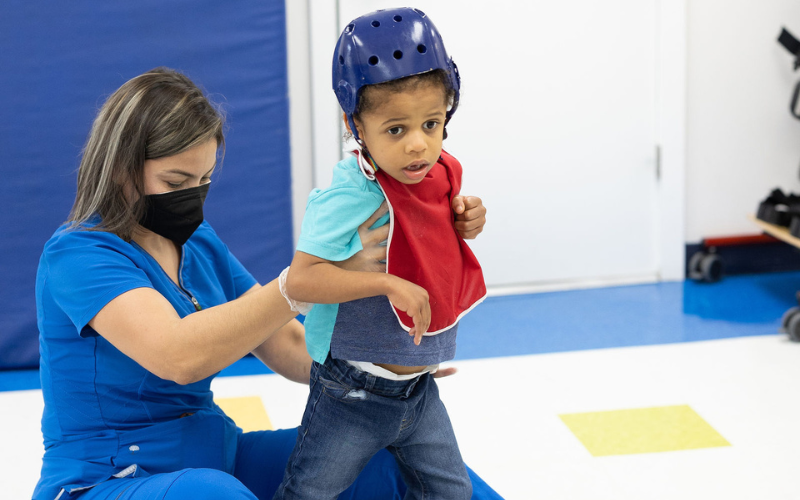

Every child’s growth is a unique journey. When developmental challenges arise, timely and coordinated therapy can facilitate progress. Pediatric therapy brings together specialists in physical therapy, occupational therapy, speech therapy, and behavioral therapy. Each addresses different skills children need to learn, play, communicate, and participate in daily life.
In a Prescribed Pediatric Extended Care (PPEC) setting, such as Children’s Rehab, families have access to a nurturing, medically supported environment. Here, therapies work together seamlessly. Children benefit from consistent routines and collaborative care planning. Interventions are tailored to their medical and developmental needs. Early, integrated support helps children overcome obstacles. It also builds confidence, independence, and readiness for new milestones.
Physical Therapy (PT): Building Strength, Mobility, and Motor Confidence
Pediatric physical therapy focuses on helping children move their bodies effectively and safely. PT addresses the development of gross motor skills—such as crawling, standing, walking, and jumping—and supports children with conditions that affect strength, muscle tone, balance, and coordination.
Physical therapists often work with children diagnosed with developmental delays, neurological disorders, orthopedic conditions, cerebral palsy, Down syndrome, genetic conditions, or gait concerns. In a PPEC setting, PT can include activities such as assisted standing, strength-building exercises, stretching routines, gait training, posture correction, and play-based mobility activities that encourage children to move with confidence and independence.
By improving mobility, endurance, and physical independence, PT enables children to participate more fully in everyday activities. These improvements not only support physical health but also encourage engagement in play, learning, and social interactions.
Occupational Therapy (OT): Supporting Daily Skills, Sensory Regulation, and Independence
While PT focuses on large movements, occupational therapy (OT) focuses on the small but essential skills children need for everyday functioning. OT is often described as the therapy that helps children “do their jobs”—from playing and learning to getting dressed, feeding themselves, and managing sensory experiences.
Occupational therapists support the development of fine motor skills, hand-eye coordination, grasp strength, handwriting readiness, self-care skills, and sensory processing. Many children benefit from OT when they struggle with tasks such as holding utensils, tolerating textures, staying focused, transitioning between activities, or responding appropriately to sensory input.
In a PPEC environment, OT sessions may include sensory integration techniques, play-based strengthening activities, the use of adaptive equipment, visual-motor exercises, and skill-building routines for feeding, dressing, and grooming. OT also works closely with PT and speech therapy to reinforce shared developmental goals. For example, better sensory regulation can improve a child’s ability to participate in PT, while stronger fine motor skills can support progress in communication devices used in speech therapy.
Speech Therapy (ST): Communication, Feeding, and Social Interaction Skills
Speech therapy, also known as speech-language pathology, addresses one of the most fundamental aspects of a child’s development: communication. ST supports children who have difficulties with expressive language (using words), receptive language (understanding words), articulation, social skills, and fluency. It also plays a vital role in feeding and swallowing development—particularly important for medically complex children in a PPEC.
Speech therapists use a variety of strategies, including play-based communication exercises, visual supports, augmentative and alternative communication (AAC) systems, oral-motor activities, and structured language practice. For children who struggle with feeding, ST may help improve chewing skills, strengthen oral muscles, and ensure safe swallowing patterns.
Improved communication opens the door to stronger peer interaction, more effective learning, and greater emotional expression. For many children, speech therapy is a pathway to increased confidence and meaningful connections with others.
Behavioral Therapy: Guiding Positive Behaviors, Emotional Regulation, and Learning Readiness
Behavioral therapy focuses on helping children understand expectations, manage emotions, develop coping skills, and participate successfully in structured activities. For children who face challenges such as impulsivity, difficulty following directions, aggressive behaviors, or emotional regulation issues, behavioral therapy provides clear strategies and reinforcement systems that promote positive change.
Many PPEC centers, including Children’s Rehab, incorporate evidence-based behavioral approaches—often rooted in the principles of Applied Behavior Analysis (ABA). Through consistent routines, targeted behavioral plans, and skill-teaching interventions, behavioral therapists help children develop social skills, reduce disruptive behaviors, and enhance their independence.
Behavioral therapy frequently overlaps with other therapies. For example, improving a child’s ability to follow routines can enhance the effectiveness of PT and OT sessions, while reinforcing communication skills learned in speech therapy can reduce frustration-based behaviors. This integrated approach fosters a supportive environment that enables children to thrive.
How These Therapies Work Together in a PPEC Environment Like Children’s Rehab
One of the greatest benefits of receiving therapy in a Prescribed Pediatric Extended Care center is the integrated, interdisciplinary model of care. Children’s Rehab offers a coordinated environment where therapists, nurses, and caregivers work together to understand each child’s needs and design individualized care plans.
Therapists communicate regularly to align goals, share progress, and ensure that interventions reinforce one another. A child undergoing speech therapy to develop feeding skills may also receive positioning support from physical therapy and sensory regulation strategies from occupational therapy. Behavioral therapy can help create routines that make all therapies more productive and predictable.
Families are essential partners in this process. PPEC providers offer guidance, home strategies, and progress updates, enabling families to incorporate therapeutic techniques into their daily routines. This consistent loop of communication ensures that meaningful outcomes are achieved for children.
Empowering Your Child’s Growth Through the Right Support
Children flourish when they receive the right blend of therapies at the right time. Physical, occupational, speech, and behavioral therapies each contribute unique strengths, and together they build a comprehensive foundation for growth. Whether a child needs support with mobility, communication, sensory regulation, or behavior, early and integrated intervention can unlock remarkable progress. At Children’s Rehab, families can trust that their children are receiving coordinated care tailored to their individual needs. With the guidance of skilled pediatric therapists and the structure of a PPEC environment, children gain the tools they need to build confidence, achieve developmental milestones, and experience success in every stage of their journey.